

The Apostles
Apostles are the 12 men chosen by Christ as the chief students and disseminators of his message. The list can expand at times to include Paul, and different gospels name some members differently, but the standard dozen are:
-
Andrew
-
Bartholomew
-
James (Alpaheus)
-
James (Zebedee)
-
John
-
Judas
-
Matthew
-
Peter
-
Phillip
-
Simon
-
Thaddeus
-
Thomas
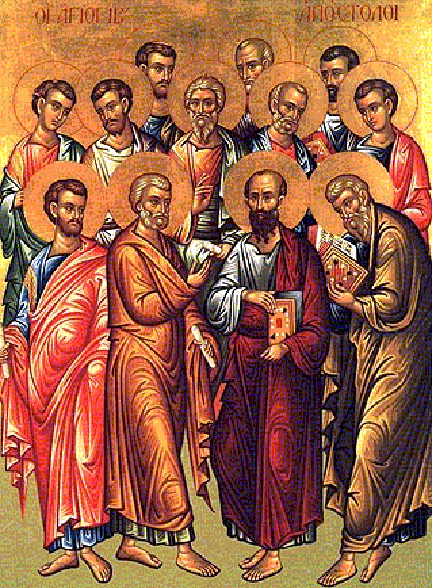
The privileged dozen were constantly in Christ’s presence - including at the Last Supper - and undertook the special mission to announce the imminence of the messianic kingdom. Peter, James, and John formed an “inner circle,” and they alone were allowed to witness certain major events, including the Transfiguration (when Christ miraculously appears in full radiance and his only miracle that involves himself) and Christ’s ordeal in Gethsemane. After Judas’s betrayal, Matthias was elected to take his place. The number 12 carries special significance and invokes the original 12 tribes of Israel – the peoples who took possession of the Promised Land after Moses’ death, according to the Old Testament.
apostle = messenger
disciple = apprentice
Both terms derive from ancient Greek. Early translations of the Old Testament were in Greek, as the Greeks ruled the Mediterranean in the final BCE years; Bible scholars of the early CE years insisted on Greek for consistency as they argued theology. “Apostle” trickles through Latin to give us “missionary.” All apostles are disciples; not all disciples are apostles.
